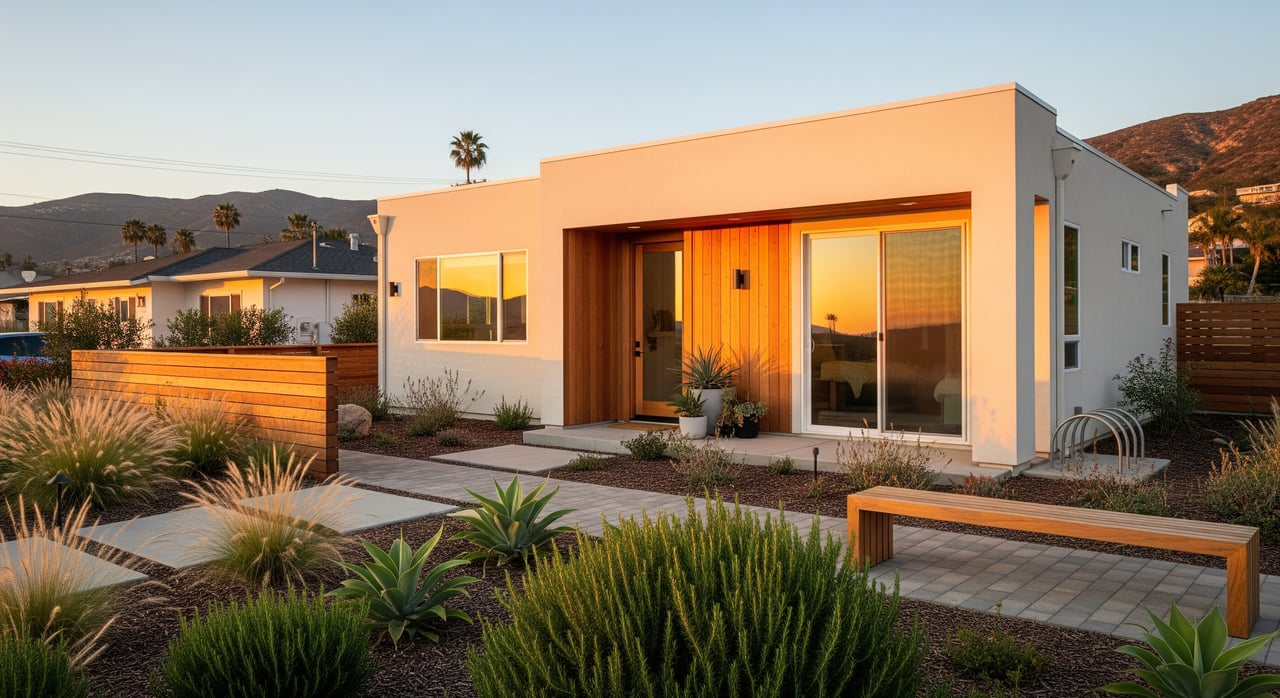
Thinking about adding an ADU to your Spring Valley property but not sure where to start? You are not alone. Between state rules and County requirements, it can feel complex. This guide breaks it down so you understand what is possible, how permits work, and what to check first to save time and money. Let’s dive in.
What counts as an ADU in Spring Valley
An accessory dwelling unit, or ADU, is a secondary home on the same lot as your primary residence. You can build it detached in your yard, attach it to the main home, or convert space like a garage. A junior ADU (JADU) is smaller and created within the existing walls of your home.
In Spring Valley, you follow California’s ADU laws and San Diego County’s local standards because Spring Valley is unincorporated. That means state baseline allowances apply, and the County reviews your plans for objective local requirements.
Who approves ADUs locally
Spring Valley ADUs are reviewed and permitted by the County of San Diego (Development Services). State law sets the floor for what must be allowed, and the County applies local standards that fit within those limits.
You may also need sign-offs from your water and sewer provider. If you are on septic, the County’s Environmental Health team evaluates capacity and any upgrade needs. If you live in an HOA community, check CC&Rs for design review steps.
Size, number, and placement basics
- JADUs are typically up to 500 square feet and must be created within the existing home.
- Detached ADUs commonly go up to about 1,200 square feet in many jurisdictions. San Diego County sets parcel-specific maximums within state limits, so confirm for your lot.
- Single-family lots are entitled under state law to at least one ADU plus one JADU. Multifamily properties can often add multiple ADUs under state provisions.
Placement depends on local setbacks, height, and lot coverage standards. Converting an existing structure may qualify for reduced setbacks compared to new construction. Ask the County about the exact numbers for your zoning.
Parking rules and transit exemptions
State law limits how much parking a county can require for ADUs. In many cases, no additional space is required. You are typically exempt if:
- The ADU is within one half mile of a public transit stop.
- The ADU is created within the existing home.
- The unit is a JADU.
If none of the exemptions apply, the County may require up to one off-street parking space. Measure your distance to transit early to know where you stand.
Fees, utilities, and septic or sewer
Impact fees are limited by state law. ADUs under a common threshold of 750 square feet are often exempt from certain impact fees, while larger units may be charged proportionally based on square footage.
Water and sewer providers can charge connection or capacity fees. In Spring Valley, service may be through a local district such as Spring Valley Water District or another provider. If your property uses a septic system, the County’s Environmental Health division will check whether the system can support an ADU and whether upgrades or a sewer connection are needed.
Owner-occupancy and rental use
Recent state law removed many owner-occupancy requirements for new ADUs, so counties generally cannot require an owner to live on site to issue an ADU permit. Long-term rentals are commonly allowed under state law. Short-term rental rules vary. San Diego County has regulations for unincorporated areas, so verify what applies if you are considering vacation rental use.
Fire, safety, and accessibility
Building and fire codes apply just like any new home. In wildfire-prone parts of the county, you will need to meet fire authority requirements for materials and defensible space. If the ADU is intended for a relative or a person with disabilities, consider accessibility features. All ADUs must meet standard safety codes.
Permitting steps and timeline
Here is the typical path in Spring Valley:
- Pre-checks and calls
- Confirm zoning, allowed sizes, and setbacks with County Development Services.
- Contact your water and sewer provider for meter and connection details. If on septic, talk to County Environmental Health.
- Review HOA rules if applicable.
- Prepare plans
- Site plan, floor plans, elevations, and structural details.
- Utility plans, septic evaluation or sewer connection plan, and any grading or drainage.
- Fire safety items like addressing, alarms, and defensible space notes.
- Submit application
- ADUs are reviewed ministerially when plans meet objective standards. A complete submittal helps avoid delays.
- Plan check and reviews
- County reviews building code, zoning, utilities, environmental health, and fire requirements.
- Permits, construction, and inspections
- After approval and fee payment, permits are issued. Construction proceeds with required inspections and a final sign-off.
State timelines require relatively quick ministerial review for complete ADU applications, commonly within 60 days. Total time from concept to permit can range from a few weeks to several months depending on complexity, septic needs, and plan revisions.
Budget factors to expect
- Design, engineering, and plan check fees.
- County building permits and any applicable impact fees.
- Water and sewer connection or capacity fees; meter upgrades if needed.
- Septic upgrades or replacement if required.
- Electrical or gas panel upgrades.
- Fire-related materials or site work in higher hazard areas.
Spring Valley homeowner checklist
- Confirm your parcel’s zoning, setbacks, and size limits with the County.
- Identify water and sewer provider; if on septic, contact Environmental Health early.
- Map your distance to the nearest transit stop to understand parking requirements.
- Review HOA design rules and submit to the association if required.
- Sketch a basic site plan and floor plan to guide your pre-application call.
- Ask the County for a fee estimate and expected review timeline.
- Plan financing, tax implications, and insurance updates for the new unit.
- Decide on long-term rental vs. short-term use and verify County rules.
Plan your next move with local guidance
An ADU can add flexibility, value, and rental income to your Spring Valley property. If you want to understand how an ADU could affect your home’s resale value or your selling timeline, connect with a local expert who knows East County and can guide your next steps. Reach out to Helena Hunter for market insights and to get your free home valuation.
FAQs
How large can an ADU be in Spring Valley?
- JADUs are typically up to 500 square feet, and detached ADUs commonly go up to about 1,200 square feet in many jurisdictions, but the County sets parcel-specific caps.
Do I need to provide parking for an ADU in Spring Valley?
- You may be exempt if you are within one half mile of transit, converting existing space, or building a JADU; otherwise, the County may require up to one off-street space.
Can I use my Spring Valley ADU for short-term rentals?
- Short-term rental rules apply in unincorporated San Diego County, so check County regulations and any registration requirements before using an ADU as a vacation rental.
Will I have to upgrade septic or connect to sewer for an ADU?
- If public sewer is available, connection may be required; if you are on septic, County Environmental Health will evaluate capacity and may require upgrades.
How long does ADU permitting take in Spring Valley?
- Ministerial review for a complete application is commonly required within 60 days, but total timelines vary based on complexity, plan revisions, and utility or septic issues.
Who should I contact first about an ADU in Spring Valley?
- Start with San Diego County Development Services for zoning and standards, your water and sewer provider, and County Environmental Health if your home is on septic.