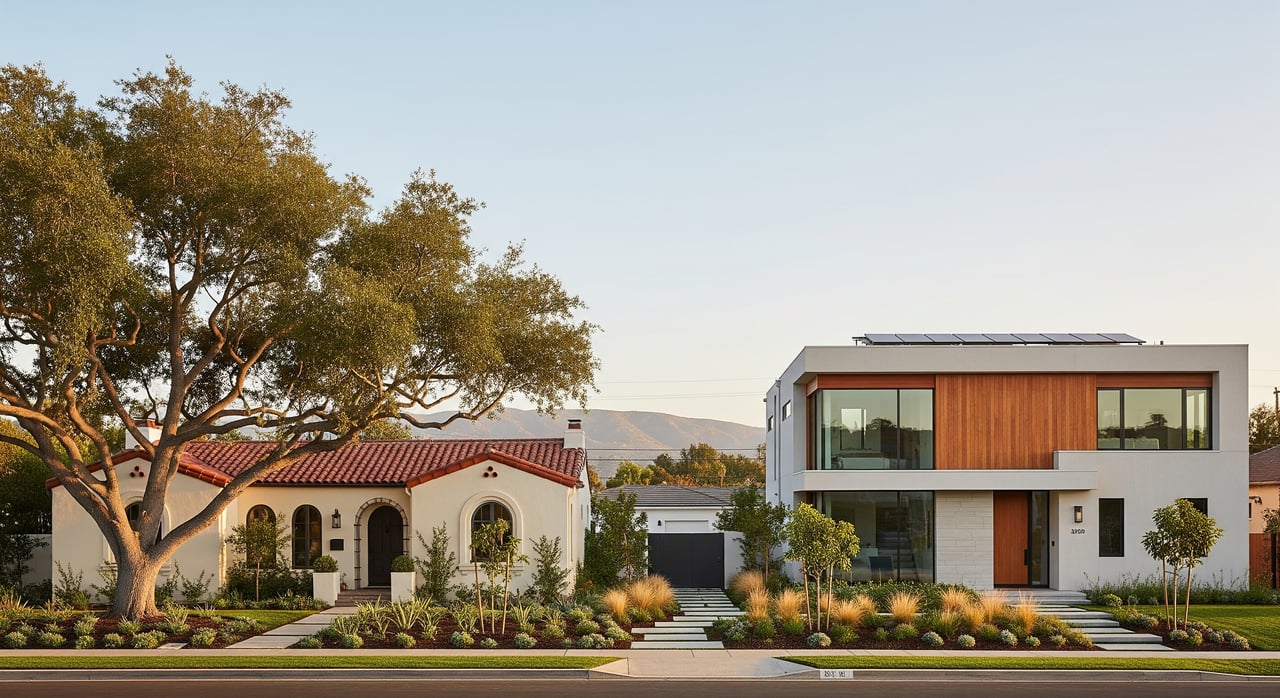
Trying to decide between a newer home and an older one in Santee? You’re not alone. Each option offers different costs, savings, and lifestyle perks, and it can be hard to weigh them without a clear plan. In this guide, you’ll learn what “newer” and “older” typically mean in Santee, how costs stack up, and which tradeoffs matter most for day-to-day living and resale. Let’s dive in.
What “newer” and “older” mean in Santee
In Santee, people usually call homes built in the 2000s and later “newer,” especially those built after major code updates like 2010 or 2020. Recent construction often includes modern electrical service, better insulation, and energy features. Many new single-family homes built from 2020 onward include rooftop solar due to state standards.
“Older” homes in Santee are often from the 1950s through the 1990s. These neighborhoods came in waves, especially in the 1970s to 1990s, with ongoing infill since 2000. Older homes may have original or partially updated systems and more mature lots with established landscaping.
Cost basics you should budget for
Purchase price and property tax
Newer homes often sell at a premium per square foot when they offer modern layouts, energy features, or community amenities. Older homes can trade at lower entry prices, especially if updates are needed. Since California’s Prop 13 ties property taxes to your purchase price, a higher purchase price means a higher ongoing tax basis for the buyer.
Insurance and hazard costs
Insurance can cost more for older homes, particularly if the roof, wiring, or plumbing are at the end of their expected life. Inland San Diego County, including parts of Santee, can have wildfire exposure, which may affect insurance availability and pricing. Standard homeowners policies do not cover earthquakes, and older homes without seismic retrofits may be more vulnerable, so many buyers explore optional earthquake coverage.
Maintenance and replacements
Age often correlates with near-term repair risk. Typical lifespans include:
- Roof: about 20 to 30 years for composition shingles.
- HVAC: about 12 to 20 years, depending on use and maintenance.
- Water heater: about 8 to 15 years.
- Electrical panel: older panels may be 60 to 100 amps; many modern needs expect 200 amps.
- Plumbing: older materials like galvanized steel or certain vintages such as polybutylene may need replacement; older sewer laterals can be cast iron.
- Windows and insulation: newer homes usually have double-pane windows and higher insulation values.
Older homes often require more short-term maintenance and capital projects, but individual condition matters more than age alone. A well-maintained 1980s home can outperform a poorly maintained 2010s home.
Energy and utilities
Newer homes tend to include better insulation, higher-efficiency HVAC, and sometimes rooftop solar or solar-ready wiring. This can lower electric bills. Older homes often run higher utility costs unless they have been retrofitted. Upgrades like heat pump systems or improved insulation can pay off over time, though they require upfront investment. Incentive programs and tax credits may be available at the federal, state, and utility levels; always confirm current eligibility and amounts before relying on them.
Renovation and permits
Older Santee homes can be great candidates for cosmetic updates or layout improvements. Always verify permits with the City of Santee if you see additions or major changes. Unpermitted work may require corrections, new permits, or bringing items up to current code. Newer construction may still carry builder warranties on structural items and systems, which can reduce short-term costs.
HOA and community costs
Newer subdivisions more commonly include HOAs with monthly dues that cover common areas and amenities. Many older Santee neighborhoods are not in HOAs, though there are exceptions. Include HOA dues and any restrictions in your budget and lifestyle planning.
Lifestyle tradeoffs to weigh
Space and lot character
Older homes often sit on more mature, established lots with larger trees and landscaping. You may see more detached garages or larger yard spaces. Newer homes tend to deliver open layouts and modern finishes, but lots may be smaller and landscaping newer or lower maintenance.
Customization vs. move-in readiness
If you want turnkey, newer homes usually need fewer immediate upgrades. If you want to add value or tailor spaces, older homes often offer more room for reconfiguration. The right choice depends on whether you prefer convenience now or a project that could grow your equity.
Resale outlook
Location and assigned school district typically influence appreciation more than age alone. Newly built homes in desirable pockets may command premiums, while well-maintained older homes on larger lots can outperform. Compare recent sales in Santee by age and condition to set expectations.
Environmental and health
Older homes can include legacy materials like lead-based paint in pre-1978 homes or asbestos in some older products. Inspections help identify concerns and remediation needs. Newer construction follows updated codes focused on energy performance and indoor air quality.
Quick comparison: newer vs. older
| Factor | Newer Homes | Older Homes |
|---|---|---|
| Maintenance | Fewer near-term replacements | Higher likelihood of near-term projects |
| Energy | Better insulation; solar more common | Higher bills unless retrofitted |
| Lot/Character | Often smaller lots, modern curb appeal | Mature landscaping; potentially larger yards |
| Customization | Move-in ready; less reconfiguring needed | Strong potential to add value via updates |
| Cash Needs | Lower immediate costs; possible HOA dues | Plan for systems, roof, or plumbing |
| Insurance/Hazards | Materials to current codes | May face higher premiums if systems are aged |
Due diligence checklist for Santee buyers
Inspections to order
- General home inspection covering structure, roof, HVAC, plumbing, electrical, windows, insulation, and interior.
- Termite and pest inspection, as termite activity is common in the county.
- Sewer scope, especially for older homes with cast iron or unknown materials.
- Roof inspection to verify age and remaining life.
- Electrical inspection to confirm amperage and wiring type.
- Plumbing inspection to identify pipe materials and leaks.
- Hazard checks: wildfire risk, flood zone, and any geologic concerns based on the lot.
- Foundation or structural specialist if there is visible settling or cracking.
- Indoor air quality or mold inspection if there are moisture signs.
Permit and disclosure review
- Verify permits for any additions or major renovations with the City of Santee.
- Review required California disclosures, including the Transfer Disclosure Statement and Natural Hazard Disclosure.
- Check for open code enforcement matters and any easements.
Financial and legal checks
- Confirm property tax history and assessed value with the county assessor.
- Review recorded liens or CC&Rs if there is an HOA.
- If financing, discuss lender expectations early, especially for older systems or electrical service.
Tips for Santee sellers
Prep and targeted updates
Consider a pre-sale inspection and a termite report to reduce escrow surprises. Tackle high-impact items that boost buyer confidence, such as addressing roof issues, fixing visible leaks, and remedying electrical hazards. Cosmetic refreshes in kitchens and baths can also help your photos and showings pop.
Pricing and disclosure
Use recent Santee comps by age and condition to position your home accurately. Fully disclose known material issues to comply with California law and build trust. If your home’s tax basis is low under Prop 13, know that buyers may compare their future tax bill to your current payments, which can become a discussion point.
How to choose what fits you
- Clarify priorities: Do you value move-in readiness or customization potential? How much time and cash can you commit in the first two years?
- Compare apples to apples: Look at recent Santee sales by age and condition to gauge fair value and likely tradeoffs.
- Get estimates early: Obtain written contractor bids for planned upgrades and get insurance quotes, especially for older homes or properties near higher-risk areas.
- Think utility strategy: Ask about solar ownership or readiness, insulation levels, and HVAC efficiency. Price out upgrades like heat pumps if you plan to modernize.
When you are weighing options, a local guide can help you analyze condition, permits, hazard exposure, and resale potential. If you want a clear plan that fits your budget and timeline, reach out to Helena Hunter for neighborhood-specific advice, a data-backed pricing view, and end-to-end support from search to close.
Ready to compare newer and older homes in Santee with confidence? Contact Helena Hunter for a local strategy session or to get your free home valuation.
FAQs
How much more should I budget for maintaining a 1970s Santee home?
- Plan based on inspections and system lifespans, since roofs, HVAC, water heaters, plumbing, and electrical panels may be at or near replacement age, which can mean higher near-term costs than a 2015 home.
Will a newly built Santee home lower my utility bills?
- Often yes, because newer homes follow updated energy codes and many include solar or are solar-ready, but your savings depend on system efficiency, solar ownership terms, and local rates.
Do older Santee homes usually have higher insurance costs?
- They can, especially with older roofs, outdated wiring or plumbing, or if the location has higher wildfire exposure; get quotes early to avoid surprises.
Should I worry about permits on an older Santee house?
- Yes, verify additions and major work with the City of Santee; unpermitted work can affect safety, insurance, financing, and the cost to bring items up to code.
Which upgrades give the best ROI before selling in Santee?
- Focus on items that boost buyer confidence, such as roof condition, HVAC function, visible plumbing and electrical fixes, plus targeted kitchen and bath refreshes based on nearby comps.
Should I get a pre-listing inspection on an older home?
- It can be helpful to speed escrow and reduce renegotiations, but it also requires disclosing any defects found; weigh timing, budget, and likely repairs.
How does Prop 13 affect my purchase or sale in Santee?
- Buyers should budget property taxes based on the new purchase price, while long-time owners often have lower assessments; this gap can influence affordability and negotiation dynamics.